Automating 95% of Financial Reconciliation
I led the UX research and design for an AI tool at Nanonets that automates 95% of financial reconciliation. It cut closing times by 70% and helped us take on industry giants like QuickBooks and Oracle.
UX Research, FinTech, Market Expansion

Brief
Responsibilities
User interviews, usability testing, user flow optimization, wireframing, mockups, prototyping, impact tracking
Duration
12 weeks
Goal
Our goal was to design an intuitive user experience that not only simplified the financial reconciliation process but also broke into the market by leveraging AI and LLMs to revolutionize the process. This innovative approach aimed to drive significant customer acquisition and increased Annual Recurring Revenue (ARR), gaining a market share and challenging the dominance of established competitors like QuickBooks, SolveXia, Xero, Oracle and Blackline.
Kickstarting with research
As reconciliation was a new domain for the team, we lacked a deep understanding of the specific requirements and challenges associated with the reconciliation process. To bridge this knowledge gap and gain valuable insights into the process, its pain points, and market gaps, we initiated a series of expert interviews. These interviews helped us understand the complexities of existing solutions, and identify areas where there was a clear opportunity to improve the user experience and streamline the process.
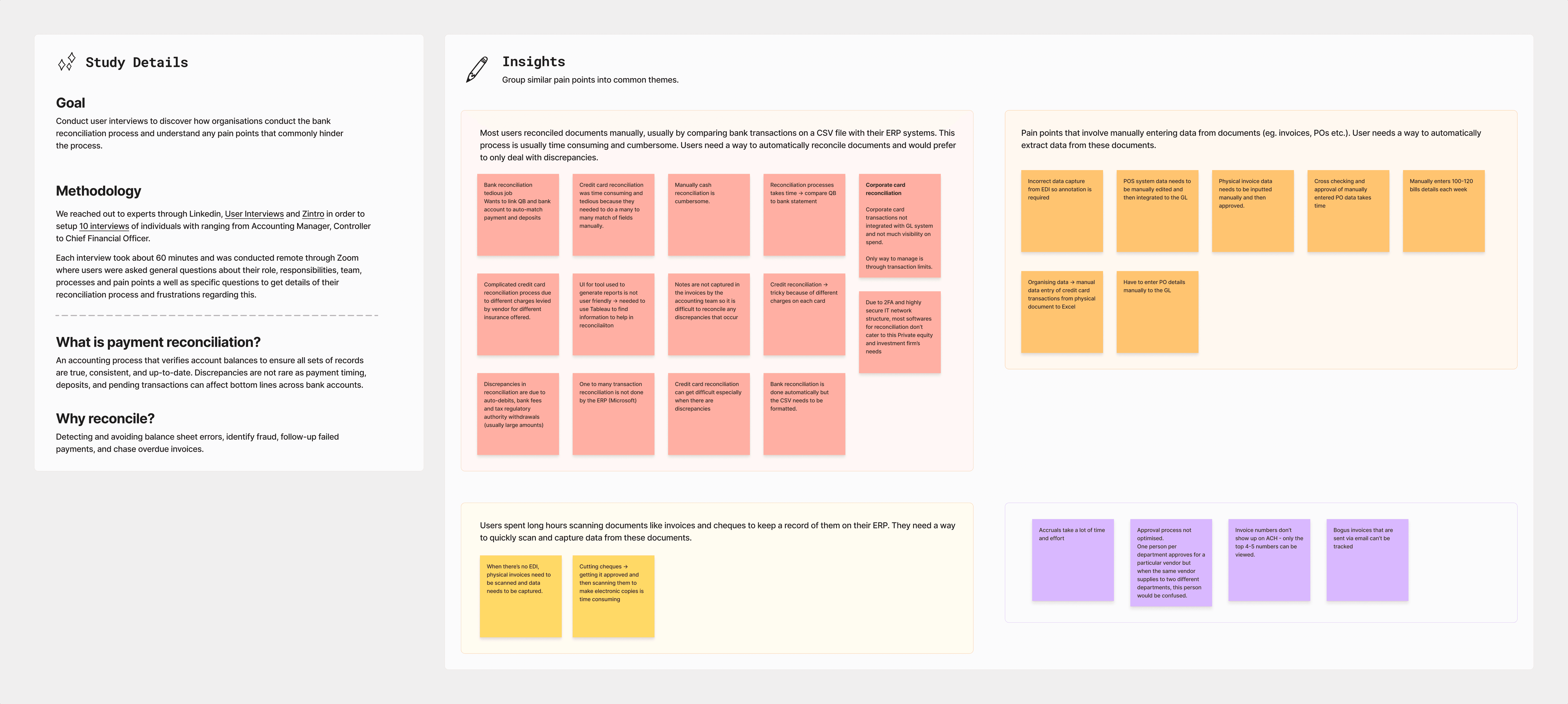
Opportunities Identified
Streamlining Manual Comparisons
Automate CSV bank transaction matching with ERP systems to eliminate manual effort.Automating Physical Document Processing
Extract data from physical documents for automated comparison with digital records.Handling Complex Transactions
Build software capable of reconciling many-to-one transactions that traditional ERPs miss.Simplifying Credit Card Reconciliation
Create a dedicated solution to manage the unique charges and complexities of credit card data.Centralized Reconciliation Platform
Offer a single hub for rule-based reconciliation that integrates seamlessly with existing ERPs.
Challenges
The reconciliation-through-AI market was relatively new, with few established competitors. This limited our ability to gather detailed information about existing solutions. Additionally, most traditional reconciliation software was only accessible through sales demos, making it difficult to directly compare features and functionality. We had to rely on the insights shared by potential customers regarding the pain points they encountered with their current reconciliation software.
An Iterative Approach
To overcome the limited competitor information, we prioritized an iterative development approach. By rapidly prototyping and seeking feedback from early users, we were able to gather valuable insights and continuously improve our feature. This iterative process allowed us to identify and address specific user needs, even in the absence of extensive market data.
Who are we designing for?
We used information we got from our interviews with experts to profile an ideal persona that would use such reconciliation software on a daily basis. Having this persona in mind while designing helped us empathize with the end user and refer to any time we had blockers in decision making.
Design: Phase One
To validate our insights from the interviews, we initiated the first phase of feature development. This MVP (Minimum Viable Product) was designed and tested with a focus on speed to quickly gather user feedback. We integrated this version with our existing workflows application for a specific AI model to gather practical insights.
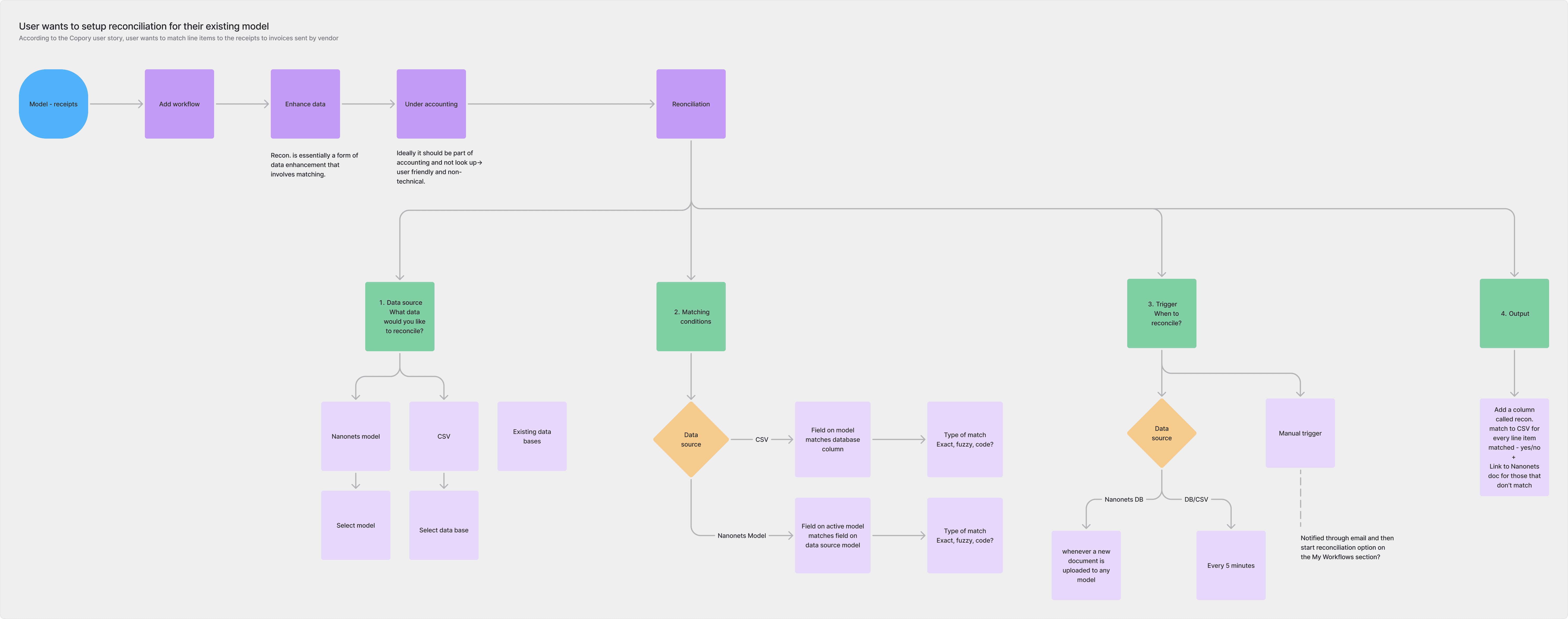
By mapping out the user flow, we established a solid foundation for the reconciliation feature. This process allowed us to visualize the user journey, organize the information architecture, anticipate potential edge cases, and ensure alignment with stakeholders from the get-go.
Since we were integrating the reconciliation feature into our existing workflow, we were able to leverage our existing design system and rapidly iterate on high-fidelity wireframes.
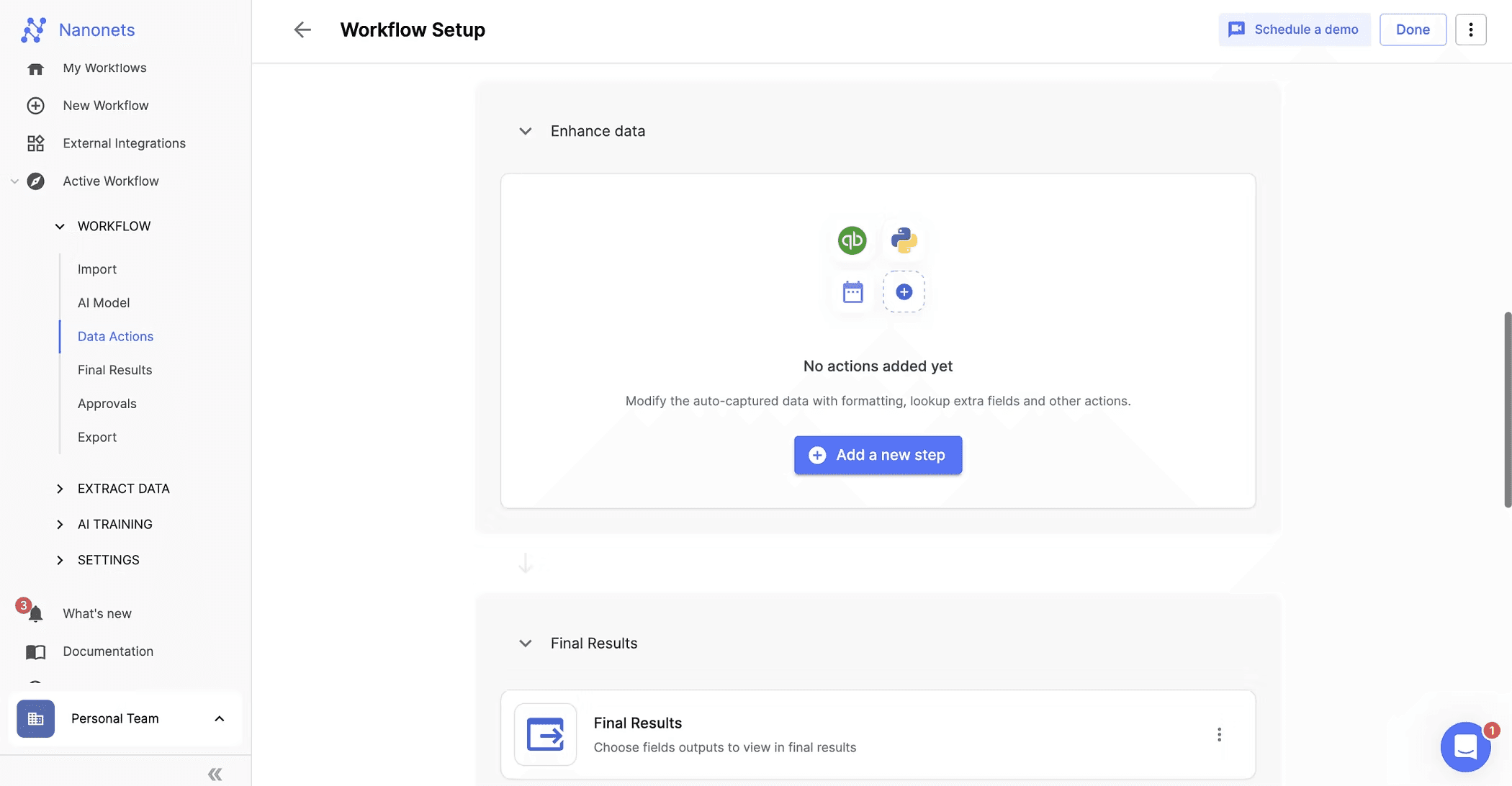
Design Solution


